
La Fornace Farm
Montalcino-Siena
La Fornace is a small family-run farm of about 7 hectares (17 acres).
La Fornace on video
The story of La Fornace
Fabio Giannetti talks about the farm his grandfather Beppe bought, the first bottlings in 1987 and 1988, the vineyard and the ageing in the cellar.
2:26 · In Italian
Fabio and Franco Giannetti
Interviewed by Italian Wine Importers, Fabio and his father Franco talk about the family since 1964, the handwork in the vineyard and the technology that helps in the cellar.
6:43
Fabio and Francesco, same questions
First the estate on film, then Fabio and Francesco, a student who came to see how wine is made, answer the same questions.
4:28 · In Italian
The 2012 harvest
Sorting the grapes on the selection table, and Fabio on a difficult summer and why the fermentation matters so much.
5:31
Our history
- La Fornace 1490
 La Fornace (“the kiln”) owes its name to its origins: in 1490 it was built as a brick kiln.
- Grandfather Giuseppe 1964
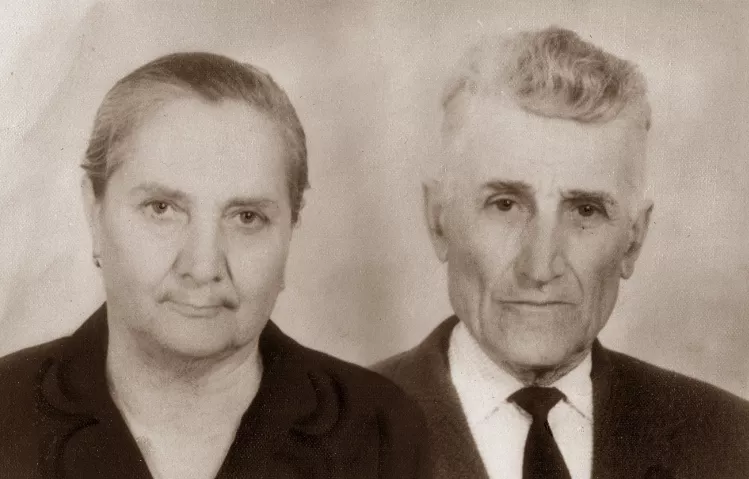 Grandfather Giuseppe bought La Fornace in 1964, after a lifetime of hard work as a sharecropper on church land. At first there were only 2 hectares (5 acres), with a small vineyard of half a hectare (just over an acre). Giuseppe came from generations of farmers who made wine and olive oil, but, as was common at the time, small growers did not bottle their own wine: they sold it to larger wineries.
- Father Franco and Mother Germana 1975
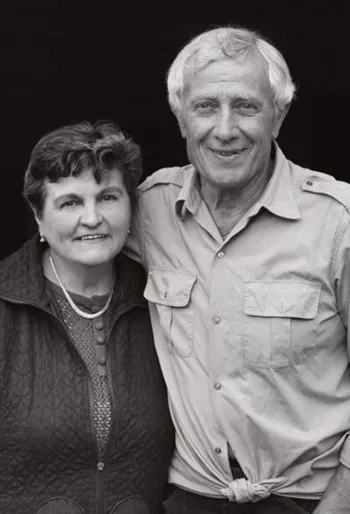 In 1975 our father Franco and our mother Germana had the chance to buy more land nearby, where they planted new vineyards.
- Il Brunello 1987/88
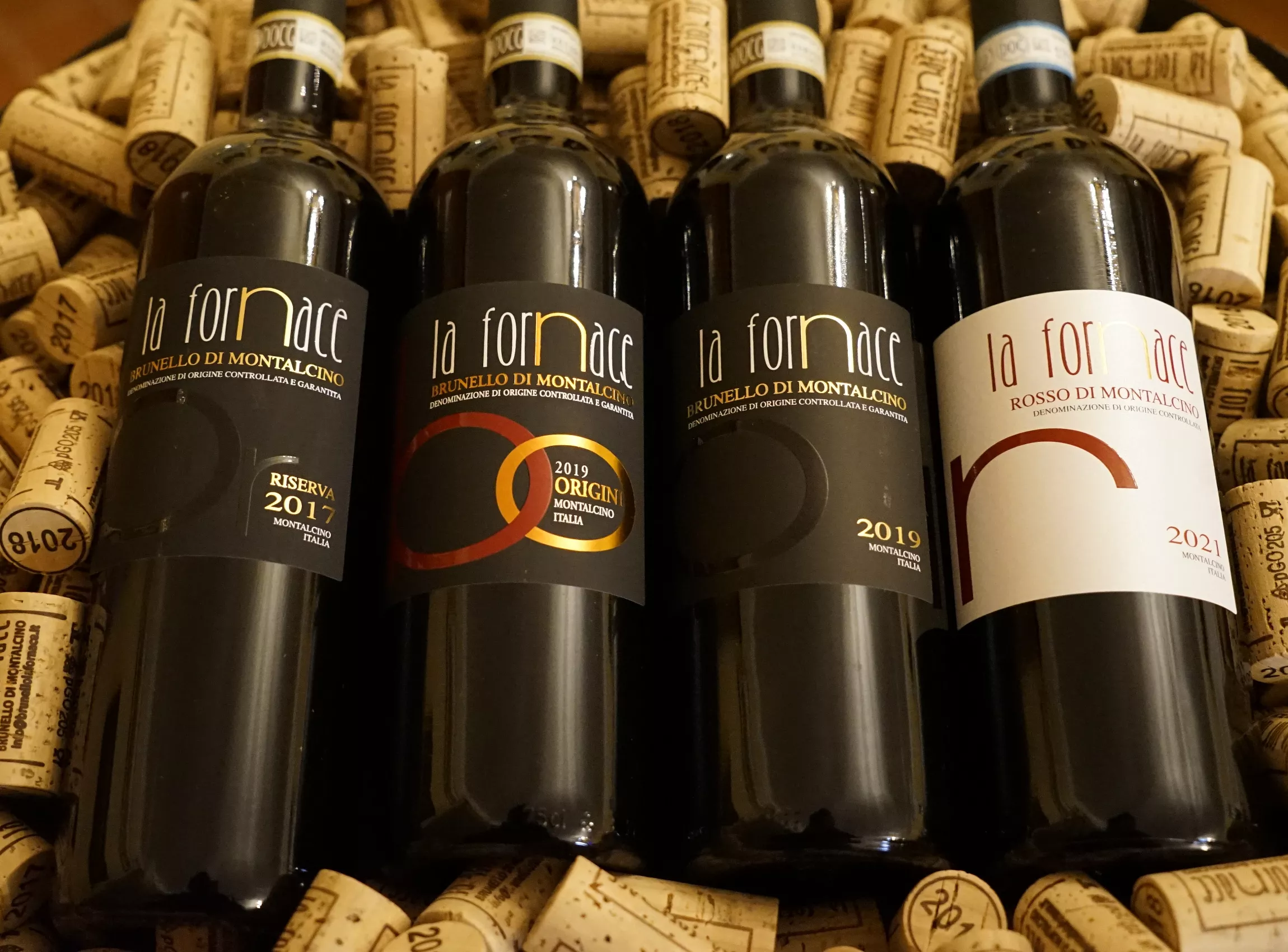 My parents began bottling in 1987, with 1,000 bottles of Rosso di Montalcino, and in 1988 they bottled their first Brunello di Montalcino. Today we make around 18,000 bottles in the best years. The estate could produce about 30,000, but we always choose quality over quantity, with no compromises.
- Fabio Giannetti 1998 – today
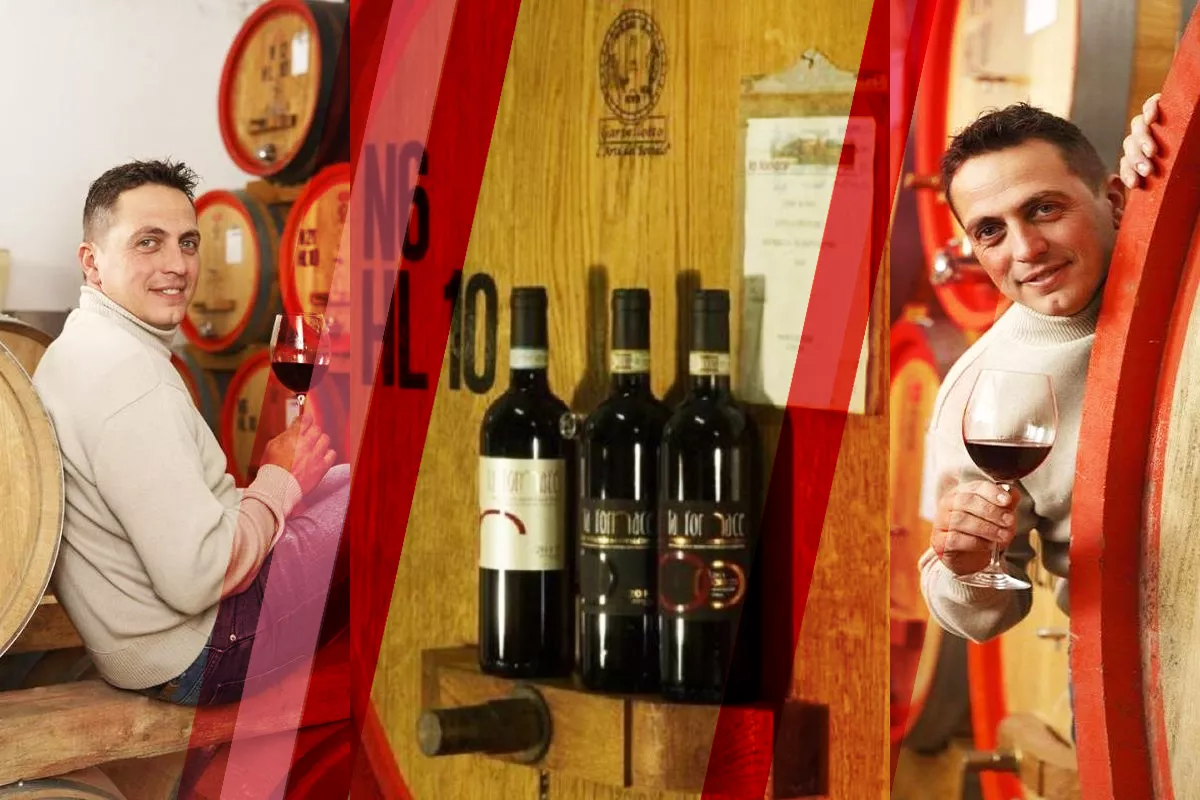 In 1998 my parents decided it was time for a new adventure and handed the reins of the farm over to me. La Fornace follows the rhythm of nature: we keep outside and polluting inputs to a minimum and respect the natural cycle of the seasons and the passing of time. That is why all the key work in making our wine is done by the experienced hands of our family.
- Vineyards
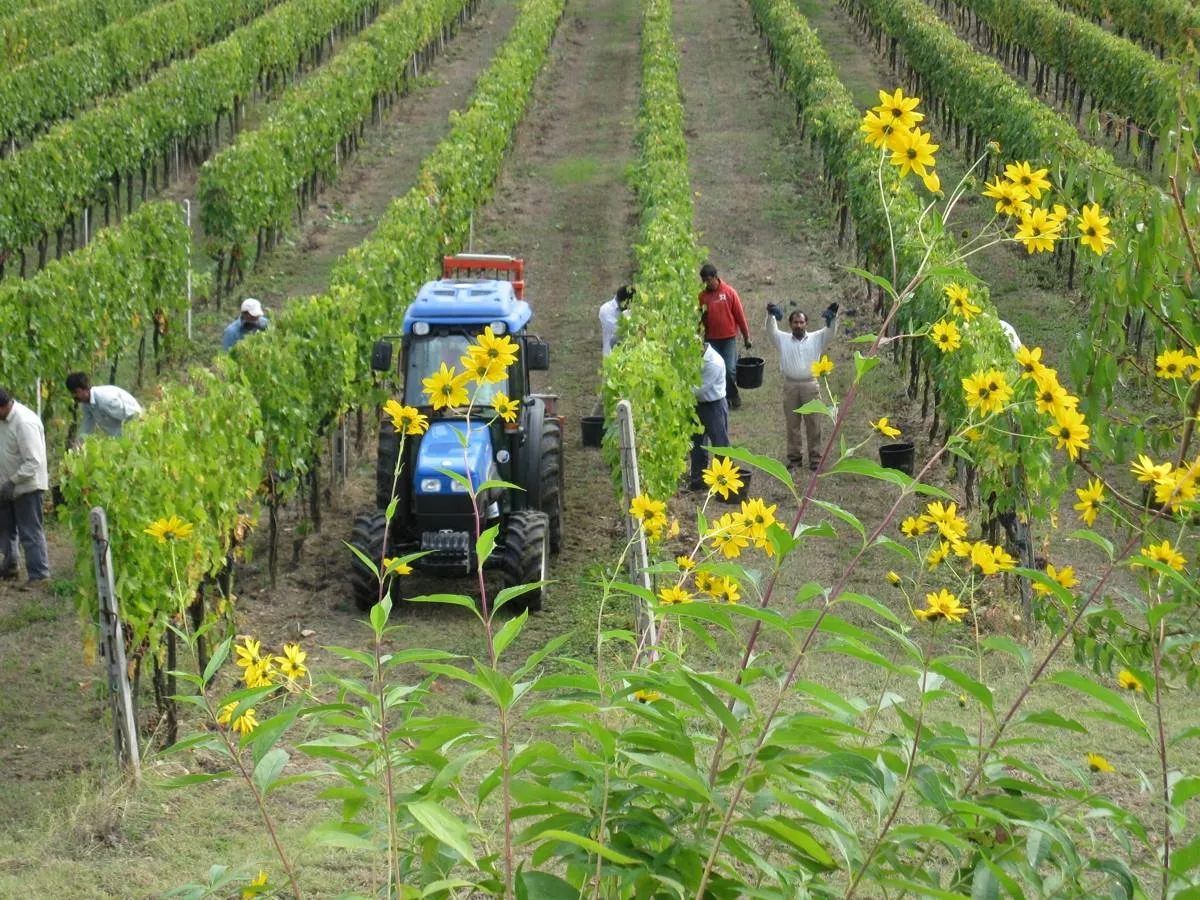 Our vineyards lie on the north-east slope of the Montalcino hill, at about 400 meters (1,300 feet), on clay, limestone and sand. We make Rosso di Montalcino from our younger vines and Brunello di Montalcino from the older ones. All the key work is done by hand by our family. The harvest is done strictly by hand by skilled pickers: it is the only time we bring in outside specialists, so we can pick quickly, get the grapes to the cellar without delay and still select carefully in the vineyard. We go through each row two or three times, picking only the grapes we want. For the Brunello di Montalcino Riserva we use smaller bunches from selected small plots. The pickers fill small crates that are gently emptied into a trailer; once full, it goes straight to the cellar, where the grapes go into the destemmer, which separates the berries from the stems. The berries then drop gently onto a vibrating sorting table, where trusted, experienced hands select them one by one. The chosen berries fall into the crusher, are lightly crushed, and the must is pumped into stainless steel tanks.
- Olive groves
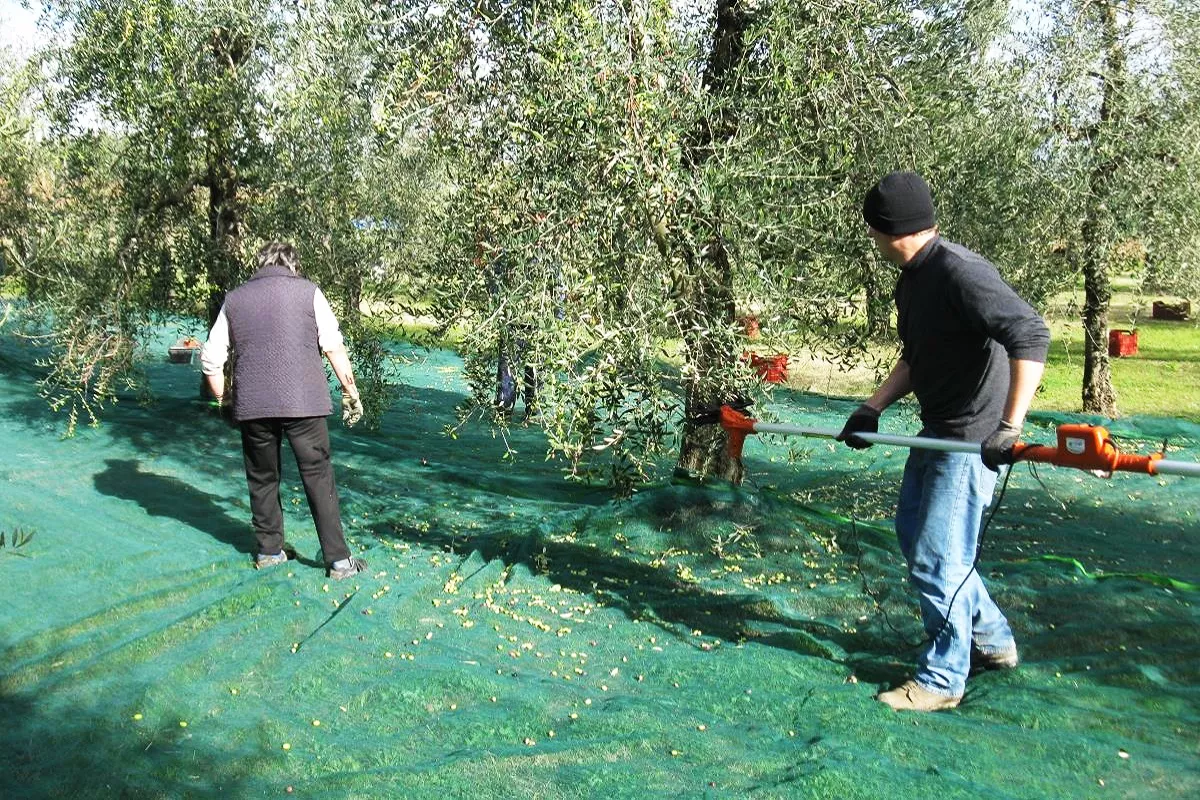 We have about 3 hectares (7 acres) of olive groves, mostly Frantoio with a small share of Leccino and other native Tuscan varieties. Our extra virgin olive oil comes only from our own trees, grown and tended entirely by our family. We harvest early, using hand-held harvesting tools to work faster, so that every evening the olives can go to a state-of-the-art mill that extracts the oil quickly and gently, keeping all its qualities intact. Our oil is unfiltered, which enhances its flavor and aroma.
- Cellar
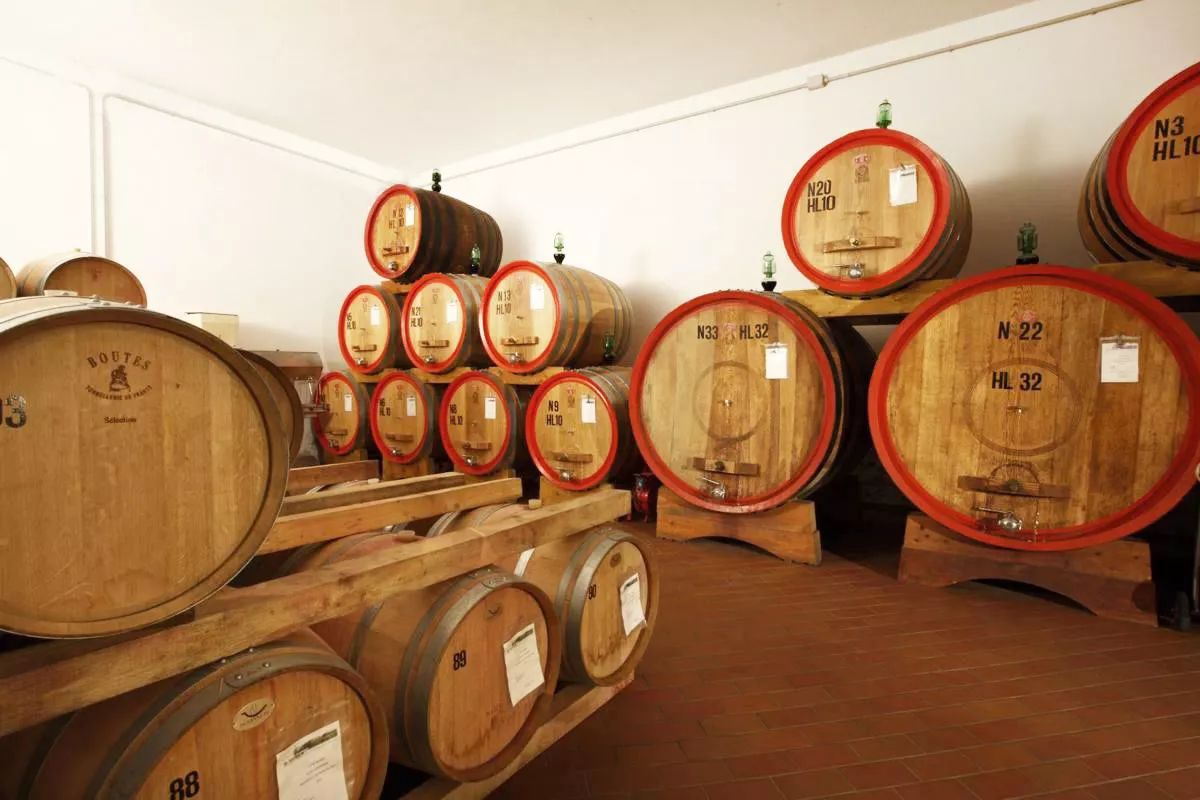 Our cellar is underground, to keep the temperature constant. Fermentation takes place in temperature-controlled stainless steel tanks: in the first days a cold soak at 7°C (45°F) preserves the most elegant, delicate aromas, then fermentation proceeds with native yeasts and frequent pump-overs or punch-downs, up to three or four of each per day. Pump-overs extract more vigorously, punch-downs more gently. Every vintage is different, so we taste the must and check the skins constantly. When fermentation is over, the wine is drawn off and the skins go to a gentle press. Press wine never goes into our bottled wines: it becomes table wine, together with the second-choice grapes. Malolactic fermentation takes place in steel. Every January the vintages that have finished their time in wood go back to steel before bottling, and the new vintage starts its aging in wood; this is also when some barrels are replaced with new ones. Throughout aging we taste and check the wine regularly, to follow how it evolves and decide when to move it from one barrel to another.